Teaming That Holds: Leadership's Infrastructure (Learning Entry 1: Building Functioning Teams)
Jan 01, 2026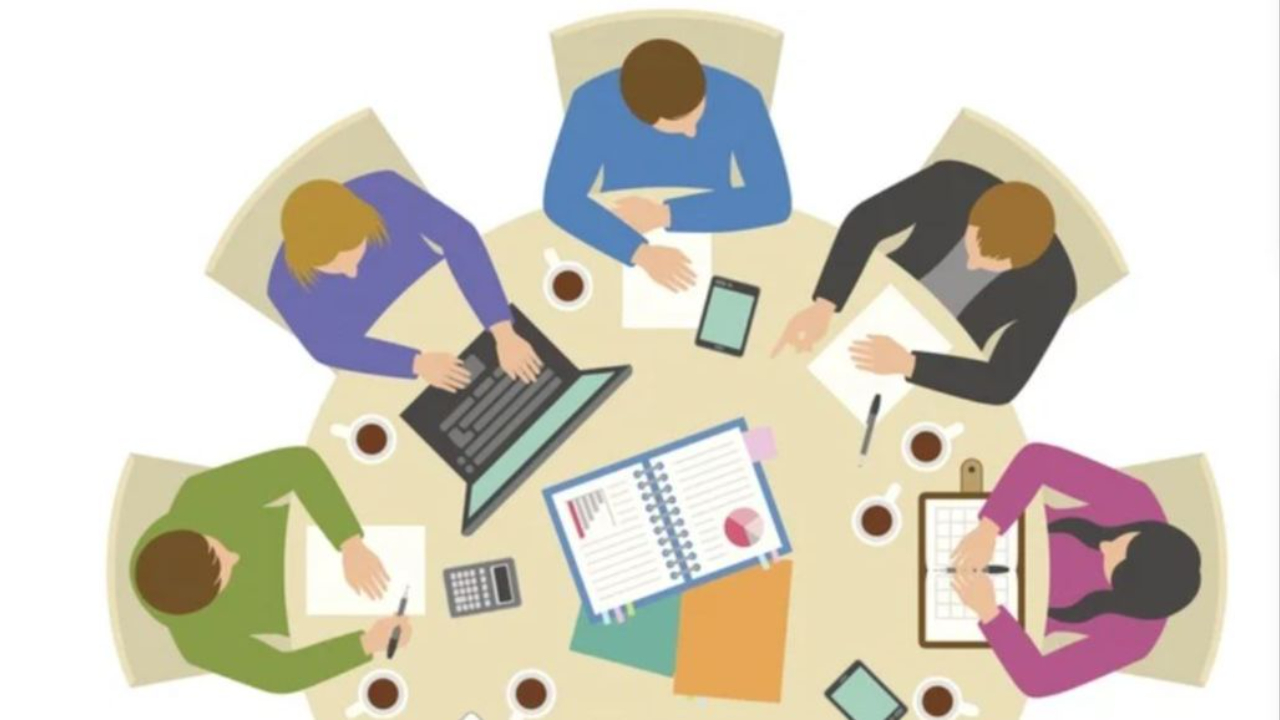
Teams Aren’t Committees: What Makes a Team Actually Function
Estimate Read Time: 7:30 min.
January Series: Teaming That Holds: Building the Infrastructure for Sustainable Leadership
A note from the Making Champions of Change Team: This blog is the first of five in the Teaming that Holds Series. Throughout the series, leaders will be asked to pause with opportunities to reflect (make-meaning within your own experiences), connect (find entry points in your context or bring system awareness), or grow (create intentional direction for leaders or their team) alongside fellow readers and the teams they support. Teaming holds implementation together. When it’s unclear, the system absorbs the cost in time, trust, and emotional labor. We are so grateful you are here!
If we call everything a team, nothing actually functions like one. In education, we meet constantly. We convene committees, workgroups, task forces, leadership teams, problem-solving teams, data teams, and design teams; often with the best of intentions. Yet many of these groups experience the same familiar tension: long meetings, circular conversations, fragile agreement, and decisions that feel heavier than they should.
The issue is rarely commitment or care. More often, it’s that we’ve asked groups of well‑intentioned people to do team‑level work without the conditions that allow teams to function. Research across education, healthcare, and organizational psychology is remarkably consistent on this point: teams are not defined by who sits at the table, but by the conditions that shape how people think, decide, and act together (Hackman, 2002; Wageman, Hackman, & Lehman, 2005; Salas et al., 2018). This distinction matters most when the work is complex.
Complexity can show up when teams are navigating tough conversations about systems planning, like setting student behavior thresholds, creating intervention structures, learning about or determining training systems for new data practices, or single platform use decisions that shape daily instructional and support work. These moments reveal whether a group is simply meeting…or truly functioning as a team.
Teams, Committees, and Task Groups: A Necessary Distinction
Committees and task groups play an important role in systems. They gather input, complete discrete tasks, or provide recommendations. Teams, however, are different. Teams share responsibility for outcomes, not just tasks. Their work is interdependent. Decisions made by one member affect the work of others. Because of this, teams require conditions that support collective thinking, not just information sharing.
Wageman and colleagues (2005) found that team effectiveness depends far less on individual talent and far more on enabling conditions: clarity of purpose, supportive structures, and shared ways of working. Without these conditions, even highly skilled professionals struggle to make sound decisions together.
In educational settings, this distinction becomes especially visible when teams are asked to make decisions that carry real consequences: determining behavioral thresholds, aligning intervention entry and exit criteria, or selecting and implementing intervention platforms that require consistency across classrooms, counselors, and specialists. These are not tasks that can be completed in isolation. They require shared understanding, trust, and coordinated action.
The Conditions That Allow Teams to Function
Across sectors, research consistently points to a common set of conditions that allow teams to function effectively, especially when the work is complex and the stakes are high (Salas et al., 2018; Edmondson, 2019). These conditions are not abstract ideals. They are designed, practiced, and sustained through how teams structure their work and engage with one another over time. You will find a combination of these conditions or characteristics across publishing; they are synthesized into four themes (Clarity of Purpose, Psychological Safety and Trust, Collective Efficacy, and Shared Mental Model & Continuous Growth) here for leaders to have an easier connection point to reflect on current conditions and needed changes regularly.
In my experience supporting district, school, and site-based teams navigating change, these conditions become most visible when teams are making difficult decisions. Some of the toughest conversations I have recently helped teams navigate were in the realm of behavior thresholds, intervention structures, or the systems that support data-informed practice.
Reflect → Connect:
- When your team faces a hard decision, which conditions help you stay engaged? Which ones tend to disappear under pressure?
Clarity of Purpose
Clarity may be the most underestimated condition in team functioning. When purpose is assumed rather than named, teams expend enormous emotional energy trying to interpret what the group is responsible for.
Effective teams have shared clarity about why they exist, what decisions they are responsible for, and how their work connects to the larger system. Roles, routines, and decision-making processes are explicit. This clarity reduces confusion, limits emotional labor, and allows teams to use their time and expertise well.
In my experience supporting teams implementing data systems and intervention platforms, lack of clarity often shows up as confusion about thresholds, inconsistent use of data, or disagreement about next steps. This is not because people disagree on values, but because they are answering different questions.
Psychological Safety and Trust
Psychological safety and trust work together to shape how teams engage when the work becomes difficult. Trust develops over time as team members experience one another as reliable, prepared, and committed to shared agreements (Bryk & Schneider, 2002). Psychological safety is how that trust is experienced in real time; whether people feel able to question assumptions, surface uncertainty, and disagree without fear of negative consequences (Edmondson, 2019).
In practice, these conditions inform how teams handle disagreement, interpret data, and talk through decisions. Teams that lack trust and psychological safety tend to avoid conflict or settle for surface-level agreement. When these conditions are present, teams are more willing to stay engaged in hard conversations because relationships feel stable, even when perspectives differ.
For a deeper exploration of how psychological safety and trust show up in real teams, see Sharing the Human Experience: Building Psychological Safety and Trust Beyond the Technical Fix on the Making Champions of Change.
Collective Efficacy
Collective efficacy reflects a shared belief that together, the team can influence outcomes. In teams working through behavioral decision-making or intervention infrastructure planning, this belief is critical. Without it, conversations stall, risk-taking disappears, and responsibility quietly shifts elsewhere.
Collective efficacy is not built through encouragement alone. It is strengthened when teams have clarity about their purpose and authority, access to shared information, and predictable processes for making decisions together.
When teams experience these structures, confidence grows; not because the work is easy, but because it feels possible.
Reflect → Connect:
- When challenges arise, does this team lean in with belief, or quietly look elsewhere for answers?
Shared Mental Models and Continuous Growth
Effective teams do not just work together, they think together. Shared mental models reflect a common understanding of how problems are defined, how data is interpreted, and how decisions move into action (Salas et al., 2020). When teams share these frames, conversations are more efficient, and decisions are more likely to hold across contexts.
When mental models are misaligned, teams may use the same language while answering different questions. This often shows up as repeated debates, stalled progress, or confusion about next steps. When people seem unwilling, often they simply are not operating from the same assumptions.
High-functioning teams recognize that alignment is not a one-time event. As the work evolves, teams grow alongside it. They pause to reflect on how their processes are working, revisit norms or routines when needed, and make adjustments without shame. Reflection and adjustment are not separate from the work; they are part of the work.
Reflect → Connect:
- Are we still thinking from the same frame? When the work shifts, do we permit ourselves to adjust how we work together?
Together, these conditions shape whether teams are able to stay engaged, think clearly, and move forward during change. They live not in intention alone, but in everyday team practices: how meetings are structured, how roles are shared, and how teams respond when the work becomes challenging.
Where These Conditions Live: Everyday Team Practices
One of the most important, hopeful findings from teaming science is that these conditions do not live in mission statements. They live in tangible team practices. Across teams engaging in tough discussions, no matter what the implementation effort is asking of them in terms of systems change, I consistently see collective efficacy, trust, and clarity strengthened through three practical artifacts:
Agenda or Meeting Minutes Documents
Effective teams use agendas as thinking tools, not compliance artifacts. A planful agenda communicates purpose, protects time for sense‑making, and signals which decisions matter most. When agendas are clear, teams spend less time orienting and more time engaging in meaningful dialogue.
Explicit Meeting Roles
Roles such as facilitator, note‑taker, and timekeeper are often seen in many teams, but additional roles like focus monitor, equity keeper, or data analyst distribute cognitive load and protect equity of voice (Rogelberg, 2019; Salas et al., 2018). These roles are especially important when teams are navigating emotionally charged topics, where power dynamics and assumptions can quietly shape outcomes.
Norms and Working Agreements
Norms operationalize trust and psychological safety. They clarify how teams engage when tension arises, how disagreement is handled, and how decisions are revisited when new information emerges. Teams that revisit and refine norms over time are better equipped to sustain effectiveness during periods of change. Together, these practices create the conditions that allow teams to engage in difficult conversations without becoming defensive or fragmented.
In the fourth Community Learning Entry of the Teaming That Holds series, thought partners from Making Champions of Change will explore ways teams can reconnect with their norms in Refining Practice Together: Re-Evaluating Norms Without Shame. This entry includes a downloadable reflection resource to support teams in pausing, reflecting, and strengthening how they work together.
Teams in Times of Change
Education is operating in a sustained state of change. Whether teams are revising behavior frameworks, aligning intervention pathways, or selecting platforms to support data‑informed decision‑making, the work is complex and deeply human.
What I’ve learned through years of supporting teams across roles (district leaders, principals, counselors, interventionists, and teachers) is this: teams do not falter because the work is hard; they falter when the structures meant to support the work are unclear. When collective efficacy, trust, and clarity are intentionally built into team practices, teams are more willing to stay at the table, engage in productive disagreement, and make decisions that hold across classrooms and contexts.
Reflect. Connect. Grow.
- Where do the teams you’re connected to feel most confident—and where do they hesitate?
- Notice how clarity of purpose, trust, and collective belief show up (or don’t) in everyday meeting practices.
- What small shift in how teams structure their work might help the system carry change more sustainably?
Next in the series --> Clarity as Equity: how purpose, roles, and routines reduce emotional labor and protect people during change.
References
Bryk, A. S., & Schneider, B. (2002). Trust in schools: A core resource for improvement. Russell Sage Foundation.
Edmondson, A. C. (2019). The fearless organization: Creating psychological safety in the workplace for learning, innovation, and growth. Wiley.
Hackman, J. R. (2002). Leading teams: Setting the stage for great performances. Harvard Business School Press.
Rogelberg, S. G. (2019). The surprising science of meetings. Oxford University Press.
Salas, E., Reyes, D. L., & McDaniel, S. H. (2018). The science of teamwork: Progress, reflections, and the road ahead. American Psychologist, 73(4), 593–600.
Wageman, R., Hackman, J. R., & Lehman, E. (2005). Team diagnostic survey: Development of an instrument. Journal of Applied Behavioral Science, 41(4), 373–398.
This series is shaped by Dr. Morgan Goering, who works alongside educational leaders and teams to build sustainable systems through clarity, trust, and shared purpose. Her work centers on helping teams move beyond meetings toward meaningful, human‑centered collaboration, especially in times of change. This series reflects the collective learning that emerges when leaders, educators, and coaches engage deeply with the work together.
